YOGAVYA

ELEVATE YOUR LIFE THROUGH YOGA
Refine your being through quality professional breathwork. From newcomers to experts, discover serenity and balance within our welcoming community.
Versatile Education: Breathwork Study
Professional Support: Skilled mentors for every path
Spiritual Growth: Prioritize total wellness
Choose your Style



Community Insights
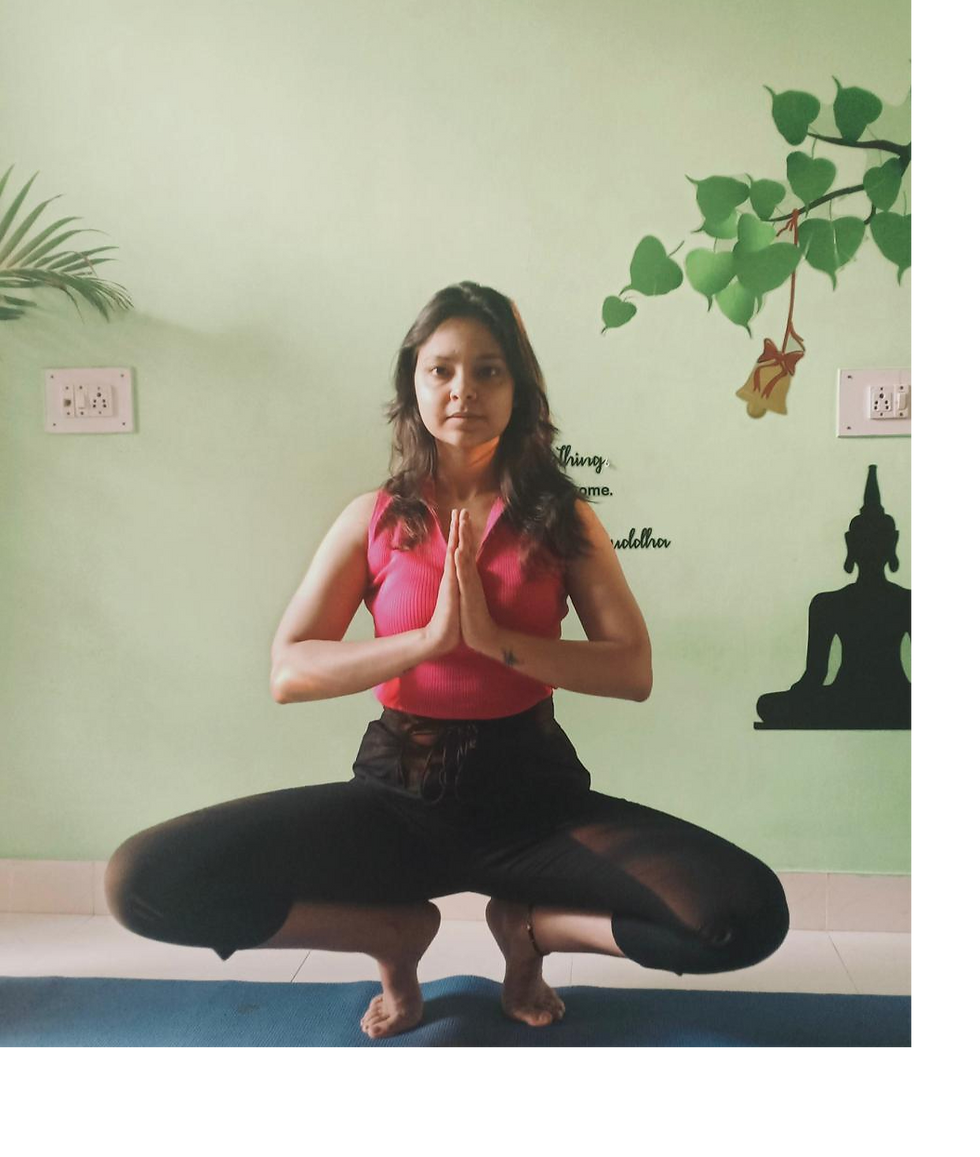
Rajpriya Chaturvedi
500 hours Certified Yoga Master

Why Authentic Yoga goes beyond Asanas?
Today, yoga is often seen as beautiful postures, flexible bodies, and perfectly framed social media pictures. And yes, asanas are an important part of yoga. But they are only a small part of something much deeper.
Authentic yoga education is not just about how the body moves — it is about how we live, how we think, how we respond, and how we grow. It is a path that gently works on the body, mind, and soul together.Many people begin yoga as a form of exercise. They come to improve flexibility, build strength, or correct posture. These benefits are real and valuable. But if we stop there, we miss the heart of yoga.
In the Yoga Sutras of Patanjali, yoga is described as an eightfold path — a complete guide to living with awareness and balance.
The eight limbs of yoga are:
• Yama – how we treat others
• Niyama – how we treat ourselves
• Asana – physical postures
• Pranayama – conscious breathing
• Pratyahara – turning inward
• Dharana – focused concentration
• Dhyana – meditation
• Samadhi – deep absorption or enlightenmentAsana is just one limb among eight.
When yoga education focuses only on postures, it skips both the roots and the wings — the ethical foundation that grounds us and the meditative practices that elevate us. Yoga was never meant to be just a workout. It was meant to be a way of being.
True yoga education brings philosophy into everyday life. Not as something abstract or complicated, but as something practical. How do I respond when I’m angry? How do I deal with attachment? How do I cultivate discipline? How do I find stillness?
That is yoga.Pranayama, especially, is often overlooked. Yet breath is the bridge between body and mind. When we move without awareness of breath, practice can become mechanical. When breath leads the movement, something shifts. The practice becomes quieter, steadier, more inward. It becomes meditation in motion.
As teachers, we hold a responsibility. Not just to teach shapes, but to share depth. Not just to guide movement, but to guide awareness. When we teach beyond asanas, we offer students something lasting — tools they can carry into their relationships, their work, their challenges, and their inner world.
Yoga does not end when we roll up the mat.
It continues in how we speak, how we react, how we choose, and how we grow.
When yoga education honors its full spectrum — philosophy, breath, ethics, meditation, and self-inquiry — it becomes transformative. And that is where authentic yoga truly begins.

Madhuparna Saha
YOGA Practitioner,Teacher
My journey from Yoga Student to Yoga Teacher.
I first stepped onto the yoga mat with a very simple intention — to feel healthier, stronger, and more active in my body. At that time, yoga felt like a physical practice, something I was doing to improve my fitness and bring some routine into my life.
But what I didn’t expect was how quickly it began to touch something far beyond the physical.
Over time, I noticed that yoga was not only stretching my muscles — it was softening my mind. I remember one day, while practicing Sirsasana (headstand), when everything outside felt rushed and heavy — yet within a few conscious breaths, I suddenly felt calm, steady, and completely anchored in the present moment. That moment stayed with me. It made me realize that yoga was offering something deeper than movement — it was offering presence, clarity, and inner strength.
As my curiosity grew, I began to wonder what yoga truly meant beyond the postures. I started to see it as a path of connection — to the breath, to awareness, and to a more mindful way of living.
That curiosity led me to join a Yoga Teacher Training Certification program. Through the training, yoga unfolded as a complete lifestyle — one rooted in discipline, balance, self-study, and transformation. It became more than a practice I followed; it became a way of seeing and living life with more intention.
With every lesson and every challenge during the course, something changed within me. I gained confidence, not just in my practice, but in my ability to support others. Slowly, a desire emerged — to share this knowledge, this experience, and this light with people who may be searching for the same sense of grounding and growth.
Stepping into the role of a teacher felt like a natural next step — not because I had reached a destination, but because I wanted to walk this journey alongside others.
Today, I know that yoga is a lifelong learning process. The transformation continues with every breath, every practice, and every student I meet.
And if you are feeling called toward teaching — even if it feels like a small spark right now — trust that it matters. Every teacher begins as a student. Every journey begins with one step.
If this path is opening for you, know that you don’t have to walk it alone. Sharing yoga is one of the most meaningful ways to serve, grow, and contribute to the well-being of others — and it is a journey truly worth taking.
Pooja Pandey
1000 hours Certified Yoga Master
Why Authentic Yoga goes beyond Asanas?
Today, yoga is often seen as beautiful postures, flexible bodies, and perfectly framed social media pictures. And yes, asanas are an important part of yoga. But they are only a small part of something much deeper.
Authentic yoga education is not just about how the body moves — it is about how we live, how we think, how we respond, and how we grow. It is a path that gently works on the body, mind, and soul together.Many people begin yoga as a form of exercise. They come to improve flexibility, build strength, or correct posture. These benefits are real and valuable. But if we stop there, we miss the heart of yoga.
In the Yoga Sutras of Patanjali, yoga is described as an eightfold path — a complete guide to living with awareness and balance.
The eight limbs of yoga are:
• Yama – how we treat others
• Niyama – how we treat ourselves
• Asana – physical postures
• Pranayama – conscious breathing
• Pratyahara – turning inward
• Dharana – focused concentration
• Dhyana – meditation
• Samadhi – deep absorption or enlightenmentAsana is just one limb among eight.
When yoga education focuses only on postures, it skips both the roots and the wings — the ethical foundation that grounds us and the meditative practices that elevate us. Yoga was never meant to be just a workout. It was meant to be a way of being.
True yoga education brings philosophy into everyday life. Not as something abstract or complicated, but as something practical. How do I respond when I’m angry? How do I deal with attachment? How do I cultivate discipline? How do I find stillness?
That is yoga.Pranayama, especially, is often overlooked. Yet breath is the bridge between body and mind. When we move without awareness of breath, practice can become mechanical. When breath leads the movement, something shifts. The practice becomes quieter, steadier, more inward. It becomes meditation in motion.
As teachers, we hold a responsibility. Not just to teach shapes, but to share depth. Not just to guide movement, but to guide awareness. When we teach beyond asanas, we offer students something lasting — tools they can carry into their relationships, their work, their challenges, and their inner world.
Yoga does not end when we roll up the mat.
It continues in how we speak, how we react, how we choose, and how we grow.
When yoga education honors its full spectrum — philosophy, breath, ethics, meditation, and self-inquiry — it becomes transformative. And that is where authentic yoga truly begins.
Madhuparna Saha
YOGA Practitioner,Teacher
My journey from Yoga Student to Yoga Teacher.
I first stepped onto the yoga mat with a very simple intention — to feel healthier, stronger, and more active in my body. At that time, yoga felt like a physical practice, something I was doing to improve my fitness and bring some routine into my life.
But what I didn’t expect was how quickly it began to touch something far beyond the physical.
Over time, I noticed that yoga was not only stretching my muscles — it was softening my mind. I remember one day, while practicing Sirsasana (headstand), when everything outside felt rushed and heavy — yet within a few conscious breaths, I suddenly felt calm, steady, and completely anchored in the present moment. That moment stayed with me. It made me realize that yoga was offering something deeper than movement — it was offering presence, clarity, and inner strength.
As my curiosity grew, I began to wonder what yoga truly meant beyond the postures. I started to see it as a path of connection — to the breath, to awareness, and to a more mindful way of living.
That curiosity led me to join a Yoga Teacher Training Certification program. Through the training, yoga unfolded as a complete lifestyle — one rooted in discipline, balance, self-study, and transformation. It became more than a practice I followed; it became a way of seeing and living life with more intention.
With every lesson and every challenge during the course, something changed within me. I gained confidence, not just in my practice, but in my ability to support others. Slowly, a desire emerged — to share this knowledge, this experience, and this light with people who may be searching for the same sense of grounding and growth.
Stepping into the role of a teacher felt like a natural next step — not because I had reached a destination, but because I wanted to walk this journey alongside others.
Today, I know that yoga is a lifelong learning process. The transformation continues with every breath, every practice, and every student I meet.
And if you are feeling called toward teaching — even if it feels like a small spark right now — trust that it matters. Every teacher begins as a student. Every journey begins with one step.
If this path is opening for you, know that you don’t have to walk it alone. Sharing yoga is one of the most meaningful ways to serve, grow, and contribute to the well-being of others — and it is a journey truly worth taking.
Rajpriya Chaturvedi
500 hours Certified Yoga Master
Why Authentic Yoga goes beyond Asanas?
Today, yoga is often seen as beautiful postures, flexible bodies, and perfectly framed social media pictures. And yes, asanas are an important part of yoga. But they are only a small part of something much deeper.
Authentic yoga education is not just about how the body moves — it is about how we live, how we think, how we respond, and how we grow. It is a path that gently works on the body, mind, and soul together.Many people begin yoga as a form of exercise. They come to improve flexibility, build strength, or correct posture. These benefits are real and valuable. But if we stop there, we miss the heart of yoga.
In the Yoga Sutras of Patanjali, yoga is described as an eightfold path — a complete guide to living with awareness and balance.
The eight limbs of yoga are:
• Yama – how we treat others
• Niyama – how we treat ourselves
• Asana – physical postures
• Pranayama – conscious breathing
• Pratyahara – turning inward
• Dharana – focused concentration
• Dhyana – meditation
• Samadhi – deep absorption or enlightenmentAsana is just one limb among eight.
When yoga education focuses only on postures, it skips both the roots and the wings — the ethical foundation that grounds us and the meditative practices that elevate us. Yoga was never meant to be just a workout. It was meant to be a way of being.
True yoga education brings philosophy into everyday life. Not as something abstract or complicated, but as something practical. How do I respond when I’m angry? How do I deal with attachment? How do I cultivate discipline? How do I find stillness?
That is yoga.Pranayama, especially, is often overlooked. Yet breath is the bridge between body and mind. When we move without awareness of breath, practice can become mechanical. When breath leads the movement, something shifts. The practice becomes quieter, steadier, more inward. It becomes meditation in motion.
As teachers, we hold a responsibility. Not just to teach shapes, but to share depth. Not just to guide movement, but to guide awareness. When we teach beyond asanas, we offer students something lasting — tools they can carry into their relationships, their work, their challenges, and their inner world.
Yoga does not end when we roll up the mat.
It continues in how we speak, how we react, how we choose, and how we grow.
When yoga education honors its full spectrum — philosophy, breath, ethics, meditation, and self-inquiry — it becomes transformative. And that is where authentic yoga truly begins.
Madhuparna Saha
YOGA Practitioner,Teacher
My journey from Yoga Student to Yoga Teacher.
I first stepped onto the yoga mat with a very simple intention — to feel healthier, stronger, and more active in my body. At that time, yoga felt like a physical practice, something I was doing to improve my fitness and bring some routine into my life.
But what I didn’t expect was how quickly it began to touch something far beyond the physical.
Over time, I noticed that yoga was not only stretching my muscles — it was softening my mind. I remember one day, while practicing Sirsasana (headstand), when everything outside felt rushed and heavy — yet within a few conscious breaths, I suddenly felt calm, steady, and completely anchored in the present moment. That moment stayed with me. It made me realize that yoga was offering something deeper than movement — it was offering presence, clarity, and inner strength.
As my curiosity grew, I began to wonder what yoga truly meant beyond the postures. I started to see it as a path of connection — to the breath, to awareness, and to a more mindful way of living.
That curiosity led me to join a Yoga Teacher Training Certification program. Through the training, yoga unfolded as a complete lifestyle — one rooted in discipline, balance, self-study, and transformation. It became more than a practice I followed; it became a way of seeing and living life with more intention.
With every lesson and every challenge during the course, something changed within me. I gained confidence, not just in my practice, but in my ability to support others. Slowly, a desire emerged — to share this knowledge, this experience, and this light with people who may be searching for the same sense of grounding and growth.
Stepping into the role of a teacher felt like a natural next step — not because I had reached a destination, but because I wanted to walk this journey alongside others.
Today, I know that yoga is a lifelong learning process. The transformation continues with every breath, every practice, and every student I meet.
And if you are feeling called toward teaching — even if it feels like a small spark right now — trust that it matters. Every teacher begins as a student. Every journey begins with one step.
If this path is opening for you, know that you don’t have to walk it alone. Sharing yoga is one of the most meaningful ways to serve, grow, and contribute to the well-being of others — and it is a journey truly worth taking.
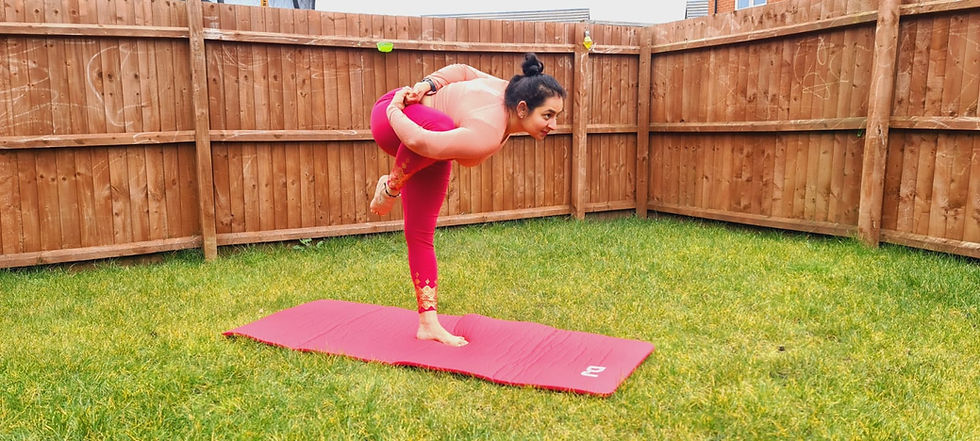
Pooja Pandey
1000 hours Certified Yoga Master
The Role of a Yoga Teacher in Today’s High-Stress World
In today’s busy and demanding world, stress has become a major problem for many people. Work pressure, studies, financial worries, and the influence of technology often lead to anxiety, tiredness, and emotional imbalance. In such a stressful environment, the role of a yoga teacher has become increasingly important.
A yoga teacher is not only someone who teaches physical exercises but also a guide who helps people achieve balance in body and mind. Through yoga postures, breathing exercises, and meditation, yoga teachers help students reduce stress, improve concentration, and maintain inner peace. They create a calm and positive environment where people can relax and focus on their well-being.
Yoga teachers also encourage healthy lifestyles. Regular yoga practice improves flexibility, posture, sleep quality, and overall fitness. It can also help reduce problems such as back pain, anxiety, and lack of concentration. In addition, yoga teachers inspire discipline, self-awareness, and positive thinking, which are essential for handling daily challenges.
Today, yoga teachers play an important role in schools, offices, fitness centers, and even online platforms. During stressful times such as the COVID-19 pandemic, many yoga teachers supported people through virtual classes and wellness sessions. Their guidance helped many individuals stay mentally and physically healthy.
In conclusion, yoga teachers play a valuable role in today’s high-stress world. They help people improve their physical health, mental peace, and emotional strength. As stress continues to increase in modern life, the importance of yoga teachers will continue to grow.
What Drives Us

We maintain that yoga exceeds simple body movement; it represents a meaningful lifestyle. At YOGAVYA, our mission focuses on the unity of thought, physique, and soul. By merging old truths with current conscious habits, we offer a refuge where each movement brings you closer to your true self and the universe around you.